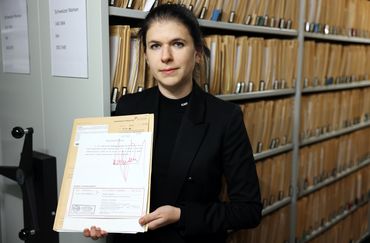
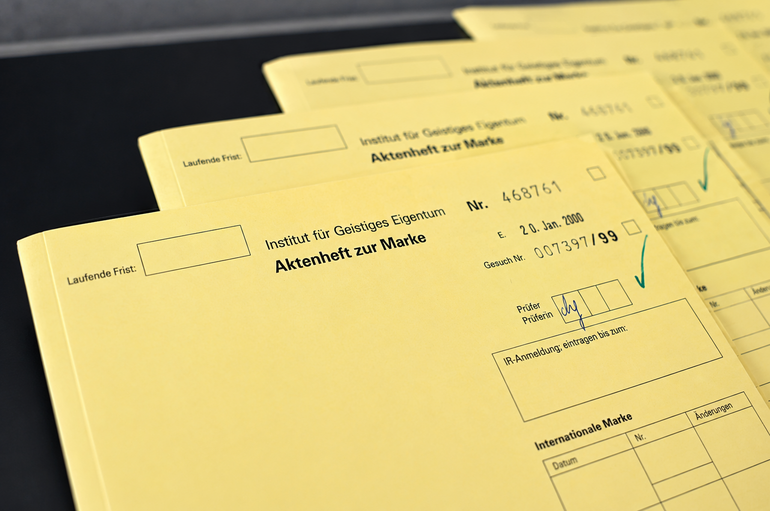
From paper files to the digital workplace In the past, typewriters, paper files and manual processes shaped everyday working life. Long-serving employees recall the typing pool, where letters notifying clients of deficiencies were typed up from handwritten drafts. Not all staff members had their own computer, and various work processes were carried out using paper and centralised printing facilities. Thanks to the introduction of PCs, databases and, later, electronic systems, this way of working gradually changed. Day-to-day working life was also completely transformed. For example, staff no longer needed to carry out physical research in the in-house library and record the steps involved on paper. Instead, an ever-increasing proportion of their work shifted to the computer. The transition from paper files to the electronic IP rights administration system in 2018 had a particularly profound impact. Trade mark expert Dorian Occhiuzzi recalls the yellow folders in which the cases for the week used to be kept. Although she initially missed the physical aspect, she says that, looking back, the benefits are clear: electronic processing has significantly improved transparency, traceability and completeness and greatly simplified the monitoring of deadlines, among other things.
For IP professionals
This is the portal for professionals working in the field of intellectual property. Here you'll find direct access to all necessary resources.
Quick links
Thirty years of the IPI – three decades of change in today’s Trade Mark & Design Division
On 1 January 1996, the Federal Office of Intellectual Property became the Swiss Federal Institute of Intellectual Property (IPI). As a result, the IPI not only became a legal personality in its own right: it also gained greater organisational and operational autonomy. It goes without saying that the staff of the Trade Mark & Design Division (M&D) carry out their tasks digitally nowadays. Files are available electronically, information can be retrieved via databases, and many processes are automated. In the past, however, everyday activity in the division looked quite different. We talked to long-serving staff about the past three decades and found out just how fundamentally working methods, processes and tools have changed.

Greater specialisation and new responsibilitiesThe organisation of the division has also changed. It has expanded, and teams have become more specialised. Initially, there were three trade mark examination teams, but this has now grown to six, not least in response to the rising number of applications. New sectors and responsibilities have emerged, such as opposition and cancellation procedures, as well as the interfaces between specialised activities and IT. “The ongoing digitalisation of online services, various fee reductions and the introduction of a simplified procedure for the destruction of counterfeit goods in small consignments have also led to a sustained modernisation of work processes,” explains Xenia Abdin, a team leader in the Applications and Registers Sector. This has heightened the need for staff who understand both the business processes and the technical requirements. The career path of Daniel Schwab, who has been at the IPI for around 18 years, reflects this development. After starting out as a trade mark examiner, he undertook further training based on his interest in IT, and he now plays a key role in developing new tools to make the division’s day-to-day work more efficient. These include the IPI’s trade mark classification tool, which helps both examiners and clients to correctly classify goods and services in accordance with the Nice Classification.
At the same time, some tasks have disappeared. For example, the typing pool was discontinued due to technological progress: administrative staff and examiners had been increasingly typing their texts themselves. The Trade Mark Search Team, which was quite large at one point, no longer exists either.
Quality and transparency in examination practice
The numerous legal developments in trade mark practice over the last 30 years have also had an impact on the entire division. Significant changes were already taking place back in 1993, shortly before the founding of the current institute, when the amended Trade Mark Protection Act came into effect. The amendments allowed clients to register three-dimensional trade marks and service marks, reduced the term of trade mark protection from 20 to 10 years, and made trade marks freely transferable (see the IPI blogpost marking the 30th anniversary of the revised Trade Mark Protection Act). At the same time, opposition proceedings were introduced. When Swissness legislation came into force in 2017, these were supplemented by cancellation proceedings on the grounds of non-use of the trade mark.
Since then, examination practice has been continuously refined – with an increasing focus on quality, transparency and legal certainty. Compared with 1993, it’s now much easier for interested parties to understand: In addition to its Trade Mark Guidelines, the IPI publishes important decisions and examination rules in its external trade mark examination support tool. This isn’t just a working tool for IPI staff: it also enables applicants and their representatives to use published decisions and examination rules as a guide. Together, the Trade Mark Guidelines and the support tool make decisions more predictable and also enhance legal certainty. In addition, interested groups, such as professional bodies and law firms, are now involved to a greater extent in the development of professional practice. Key amendments in recent years relate to the shape of goods (1 July 2019, de, fr), indications of source (8 March 2021, de, fr), indications of contents (1 December 2024, de) and three-dimensional trade marks with two-dimensional elements (1 January 2026, de).
The M&D Division observes high quality standards. Its activity needs to be lawful, consistent and transparent, and it must take appropriate account of the various interests involved. At the same time, the IPI monitors international developments and continuously aligns its practices with those of other trade mark offices, in particular the EUIPO (European Union Intellectual Property Office), provided that this is appropriate and the legal framework and case law permit this kind of alignment. It thus aims to prevent companies in Switzerland from being disadvantaged in the international arena.

International exchange of specialist knowledge
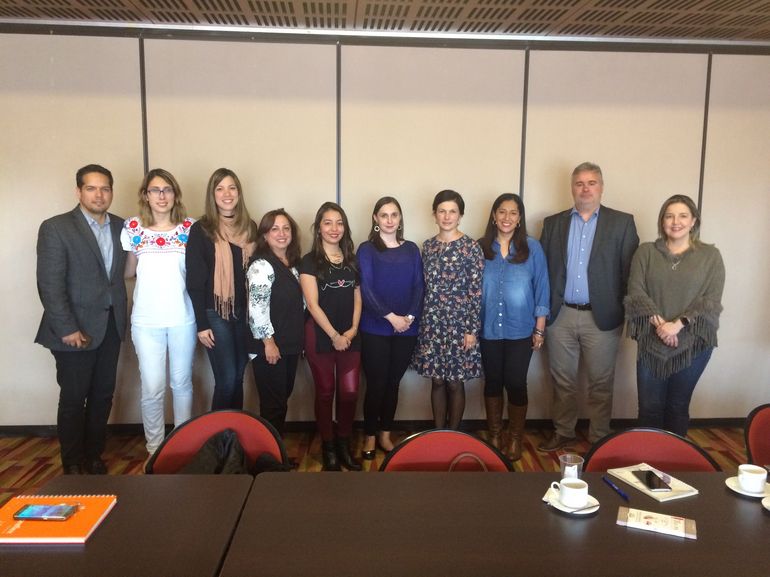
International cooperation has also been of great importance to the M&D Division over the last three decades. The IPI has engaged in international cooperation for many years, in particular with the EU (EUIPO), to harmonise trade mark practice and to exchange knowledge. Since the early 2000s, the IPI has even sent a Swiss trade mark expert to the EUIPO in Alicante for periods of between two and a maximum of four years – an experience that has proved to be very positive for all participants to date, both professionally and personally. The value of such international cooperation is also demonstrated by the IPI’s close contact with the trade mark offices in countries such as Germany (DPMA), Austria (ÖPA) and Italy (UIBM). “We have a very professional, efficient and friendly working relationship with the Italian trade mark office,” explains Dorian Occhiuzzi, a specialist in lists of goods and services (LGS) at the IPI, who has also travelled to Colombia twice: “It was a wonderful experience to be able to share specialist knowledge abroad in the language I studied.’ The staff in the M&D Division come from a wide variety of disciplines. Specialist knowledge of any kind is in demand in the division, be it in the field of travel, music or law.
New processes but constant client focus
The many changes in trade mark law, digitalisation and organisational structures that the M&D Division can look back on today are due not least to evolving client needs. Ever since 1996, the M&D Division has regularly examined ways of simplifying examination processes and speeding up procedures. “For example, early trade mark examinations also came about as a result of discussions with IPI clients,” recalls Iris Weber, a management support assistant in the division. There’s no doubt that digitalisation has raised clients’ expectations regarding staff response times and availability. However, clients continue to greatly value the fact that they can contact all sectors in M&D and clarify certain matters over the phone. As regular feedback shows, clients also appreciate the linguistic diversity of the division’s staff. Whether in German, French or Italian, trade mark applicants or their representatives and the IPI usually share a common objective: should any formal or substantive grounds for rejecting a trade mark arise during the application or examination process, both parties aim to find a viable solution as efficiently as possible, while taking account of the applicable guidelines.
Overall, the M&D Division has evolved in many ways in the past 30 years. However, its specialist tasks remain unchanged. After all, trade marks and designs need to be examined, procedures need to be followed reliably, and solutions always need to be found for clients, even if processes, systems and the legal framework change. The tools and structures used for this purpose are different today – and they’ll continue to evolve in the future. Staff members’ memories show that such change isn’t merely an abstract concept: it consists of countless small adjustments to their day-to-day work and new responsibilities, and it relies on employees’ willingness to keep learning. It remains to be seen what achievements the IPI’s staff will look back on in 2056.