“To us, the increase in speed is the key argument for using AI”
Hess AG uses AI in its innovation process in a multitude of ways, for example to conduct searches, carry out routine tasks and process analyses of data, such as telemetry data from vehicles. AI isn’t mandatory: the staff in the Development Department can decide themselves whether they wish to use it.
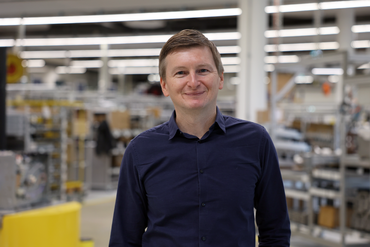
Jan Wunderlich: “With AI, we save time and gain a quicker overview of our technological environment.” Photo: IPI
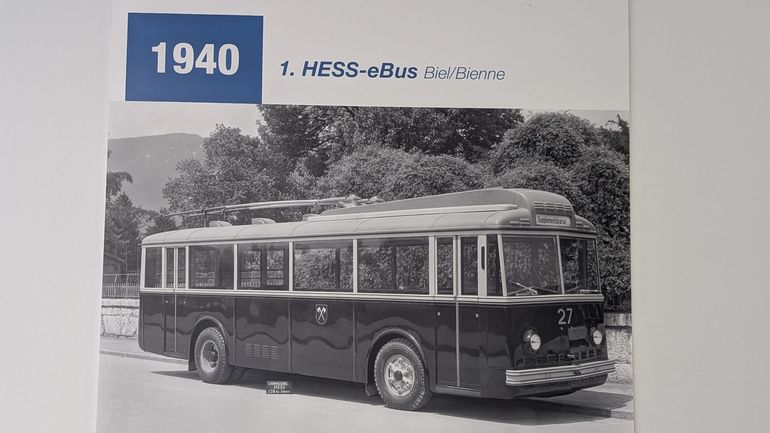
Founded in 1882, Hess AG has been supplying public transport operators with buses since 1940. Nowadays, it mainly provides electric models. The company’s history has been shaped by its innovative spirit, and its bus fleet is upgraded on an ongoing basis. AI tools now influence its development work in various ways. Staff use it for a number of tasks, including analysing tenders and conducting state-of-the-art searches in relation to potential patent applications.
The company also deploys AI in core software functions where recurring blocks that are not necessarily relevant to the functionality are utilised or created. “AI saves us time and gives us a quicker overview of our technological landscape. Of course, AI doesn’t have the final say,” says Jan Wunderlich, who has headed up the Technical Development Department for the last five years. He likens AI statements to colleagues’ opinions, which are equally open to question.
AI factor: speed
“To us, the increase in speed is the key argument for using AI. That applies particularly to evaluating and implementing results.” The company teaches its staff how to work with AI. “They can check answers for relevance, up-to-dateness and accuracy, and evaluate them accordingly.” Wunderlich compares AI to simulation tools, which became widespread 20 years ago. Back then, too, there was a huge sense of euphoria, and people were convinced that simulation software – which was cutting edge at the time – could do anything. Yet that was not the case. It’s no different with AI. The results produced by the tools are only part of the story. “What matters is how the results or answers are interpreted. This will pose a major challenge for AI users in the near future,” says Wunderlich.
IP strategy
“Hess AG thrives on innovation and new solutions. In our opinion, protecting our intellectual property is crucial, so we can maintain our technical lead in the market. We apply for patents for our inventions.” Wunderlich and his team work with external patent attorneys to achieve this, involving them from a given stage in the development process.
Together, they check which elements of technical solutions are worth protecting and how to formulate the concrete patent specifications. “Our clarifications often focus on which part of an invention should be protected and/or patented and whether it’s novel,” says Wunderlich. The company first carries out the relevant analyses with the assistance of artificial intelligence. Wunderlich explains that AI is useful for quickly gauging the current situation in terms of existing patents, solutions and the requirements set out in standards and regulations on authorisation. “AI supports us wherever data and documents need to be examined with respect to specific questions.”
Searches to quickly identify gaps in protection
Thanks to the increased use of AI, Wunderlich expects to see new software tools in future. “New applications will make searches much easier for us, especially for patents,” he comments with conviction. Before the advent of AI, the company wasn’t able to rapidly identify gaps in the protection of its inventions – or only at considerable cost via patent attorneys, searches or full examinations by patent offices in the respective countries. “Without these AI options, we’d be much more hesitant to carry out a patent search, partly because of the costs.”
In the Hess AG showroom: the first electric truck was already put into operation in 1940. Photo: IPI
The invention has to fit the company’s IP strategy
Although AI speeds up the preliminary work, the company’s still sticking to its current IP protection strategy: “It means that the technology we develop can be protected by a patent. This offers added value in technical terms for passengers and transport companies.” They continue to patent inventions in a very targeted manner. “We don’t want to remedy all the technical gaps we detect with patents that may have been suggested by AI,” says Wunderlich.
He doesn’t think that companies will apply for a much greater number of patents as a result of AI. Customer needs still drive the sector. Companies’ approaches to analyses, market monitoring and the state of the art won’t change significantly, even with AI solutions, according to Wunderlich. They may be able to broaden the scope of such work though, because it’s now possible to gain an overview more quickly and more comprehensively. Additionally, more data sources can be drawn upon for analysis.
The more data sources, the more costly the analyses
Wunderlich is convinced that the use of AI will increase the number of technological solutions in all sectors. “Our strategy for intellectual property rights is based on market analysis, the state of the art, customer usage and emerging innovations. AI makes it easier for us to draw on more data sources to gain an overview of the state of the art. Consequently, we can use data more quickly and identify potential. But this also means that there will be more results open to interpretation. The effort involved in interpreting and analysing them will likely increase. Time will tell whether all this information will result in patents.”
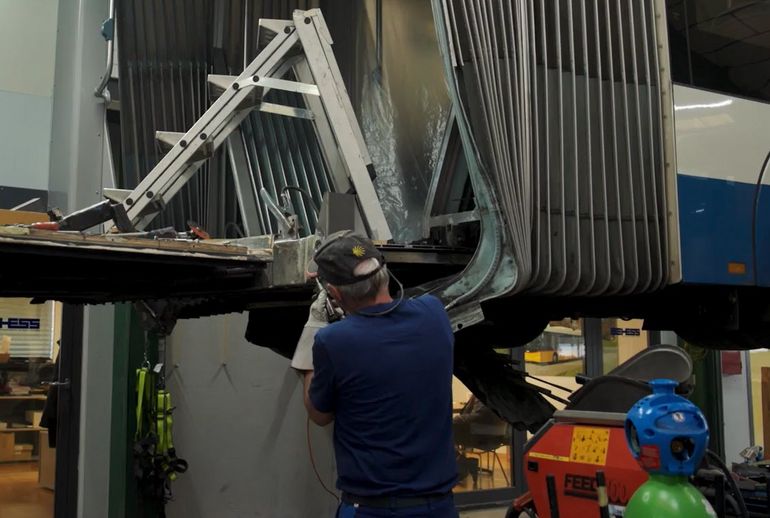
View into the workshop. Photo: IPI
View into the workshop
The key to using AI efficiently lies in the type of information or data that is fed into it. That is the experience of Carrosserie Hess AG. Data security is central when using the new opportunities offered by AI. “We need to be aware of what happens to the data we input into the AI system – particularly in the context of intellectual property rights.” The location of data will become a key issue for businesses, which want to know which servers their questions are being answered on. “Without appropriate data security measures in place, AI should be used with caution. Otherwise, we’ll undermine our intellectual property rights. When new concepts are made accessible to AI, it must be ensured that this data isn’t made public or used by the AI as a source of information for external queries. If we don’t have a highly secure environment, we can’t fully exploit the potential of AI.”
During the conversation, he recalls an anecdote. “We asked an AI tool what potential solutions exist in our sector and which areas we could move into. The tool quoted our website in its answers. That was definitely interesting,” says Wunderlich.
About Hess AG
Founded in 1882, the company manufactures electric buses. The first electric vehicles were manufactured as early as the 1940s. The Hess Group comprises several industry sectors, the largest of which is bus manufacturing.
Protecting Innovation in the Age of Artificial Intelligence
How are Swiss companies using artificial intelligence in the innovation process? Does its use influence patent filing behaviour or a company's intellectual property protection strategy? The IPI explores these and other questions in a series featuring Swiss companies. The case study will also be made available as a PDF at a later date.