Ohne Maus ins Haus: KI-Katzenklappe stoppt das Büsi
Cats are the most popular pets in Switzerland. But cat owners are less keen on the ‘offerings’ that their furry friends bring home, such as mice. To tackle this problem, the twins Denis and Oliver Widler have invented a cat flap that blocks cats bearing a ‘surprise’. They’ve applied for a patent for their innovation. After starting out in their garage, they’ve now developed their project into a company with several employees.
The Widler brothers’ invention ensures that cats’ ‘gifts’ don’t make it through the flap. Photo: Flappiedoors.com
Denis and Oliver Widler grew up with cats. But there’s one feline habit they never got used to: the gifts they bear. Time and again, there was a dead mouse in the corridor. When Oliver left his bedroom in the morning, he would almost step on it. Ultimately, his cat wanted to show everyone how clever it was. “Whenever this happened, one of the first questions was always ‘Who will clean up the mess?’ We’re big fans of cats, but we could do without this side of their behaviour,” says Oliver. He reckoned that a sustainable solution was needed. As a mechanical engineering student, he decided to take on the challenge.
Nothing escapes the camera
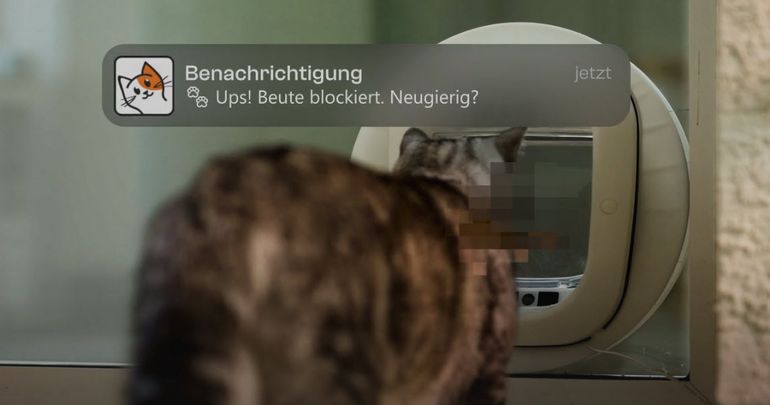
He fastened a camera to the cat flap and connected it to software that recognises images. “Ultimately, we wanted to find out what the cat was trying to bring in,” says Oliver. The AI is continuously trained with the images. The aim is that the cat flap stays closed if a cat wants to bring in its prey. Having been fed countless images, the AI is becoming increasingly accurate in its assessments. The first prototype was ready in 2019. In the summer of 2022, his brother Denis joined him. From that moment on, they worked full-time on ‘Flappie’. They even presented it on the Swiss version of the reality TV programme ‘Dragons’ Den’.
The cat flap remains closed when the cat wants to bring home prey. Having been fed countless images, the AI is becoming increasingly accurate in its assessments. Screenshot: Flappiedoors.com
“Either we see this through or we quit.”
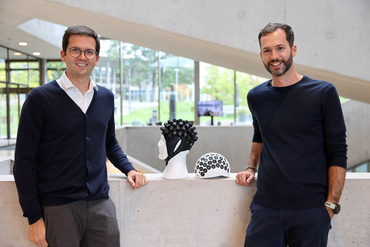
The twins publicised their project on the internet, and soon the media were reporting on it. Technical knowledge was at the heart of the invention, but it wasn’t enough to drive the project forward on its own. That’s where brother Denis came into the equation. As a business administration graduate, he now takes care of the figures and the strategic development of the company. “We reached the point where it was clear to us that we should either see it through 100% or quit. That was how the start-up Flappie came into being,” recalls Denis Widler. The name of the company is based on the term ‘cat flap’. To cope with all the work, they’ve gradually built up a team. Today, the company employs nine people.
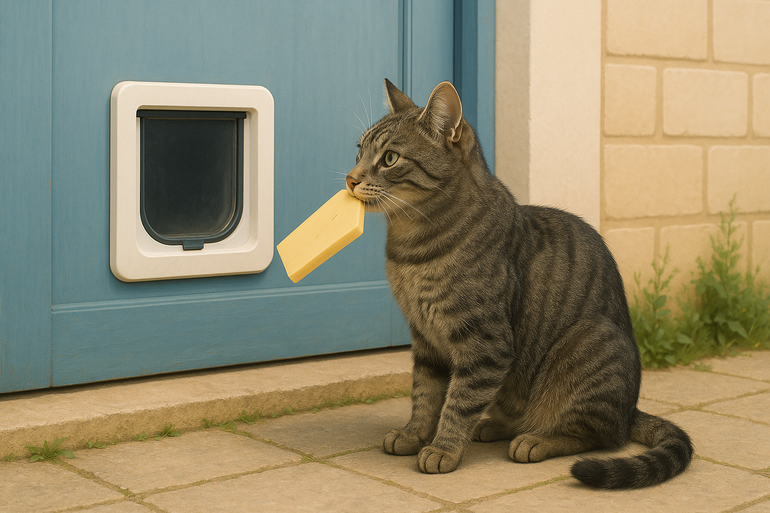
During the tests, the founders also experienced some curious incidents. Such as the time a cat tried to enter the house with a piece of raclette cheese in its mouth. Illustration: Chat GPT
A piece of raclette cheese
The technology behind the AI cat flap is constantly being refined. The camera is getting better and better at recognising whether a cat is carrying an animal in its mouth. The algorithm decides in seconds whether the cat will be granted entry. During testing, the camera has to be repositioned regularly. The software learns that not every leaf is prey. And there are also funny anecdotes. “A customer’s cat once brought home a piece of raclette cheese,” Oliver recounts. And occasionally a cat will declare war on the flap. In one case, a particularly cunning moggie wrapped a mouse in a leaf – but the deception was unsuccessful.
The Flappie founders gain these insights thanks to the community of customers who use the cat flap.
Customer feedback is fed directly into AI training in order to continuously improve the hit rate. It’s now at 94%. Over time, the duo has thus created a self-learning system. The fact that they are cat lovers themselves is, of course, an advantage. “We know the problems cat owners face, so we understand our customers,” says Oliver Widler.
Protection for the cat flap invention
The cat flap developers addressed the question of how to protect their invention at an early stage. They applied for patent protection for the technology behind the product. For recognition and marketing purposes, they also registered the name Flappie as a trade mark.
The search for a patent attorney took time, but in the end they felt it was worthwhile not writing the patent application themselves. “Patent language is a different world, and you can never manage it on your own,” says Oliver Widler. A patent search also helped them during their investigations. Such searches make it clear whether the invention is novel (a key criterion for patent applications) and whether someone else has had similar ideas.